
Spiders are a common sight around homes in Port Dover, especially during the warmer months. While most spiders found in Ontario are harmless and even help reduce insect populations, they can quickly become a nuisance when webs begin appearing around windows, porches, garages, decks, and inside living spaces. For many homeowners, constantly removing webs only to find new ones the next day becomes an ongoing frustration.
The good news is that spider activity can be significantly reduced by making your home less attractive to them. Since spiders enter homes in search of food and shelter rather than human interaction, addressing the conditions that attract them is the most effective long-term solution.
Whether you own a year-round residence or a seasonal cottage near Lake Erie, understanding why spiders are attracted to your property is the first step toward keeping them under control.
Why Spiders Gather Around Homes
Unlike ants or rodents, spiders are predators. They don’t invade homes looking for stored food or garbage. Instead, they follow their food source. Spiders feed on flies, mosquitoes, moths, beetles, ants, midges, and dozens of other insects. If your property supports a healthy insect population, spiders will naturally follow.
Homes near Lake Erie often experience higher spider activity because the surrounding environment provides ideal conditions for insects. Moisture, shoreline vegetation, mature trees, gardens, and outdoor lighting all contribute to larger insect populations, which in turn attract spiders. Reducing spider activity often begins by reducing the insects that attract them.
Remove Existing Webs Regularly
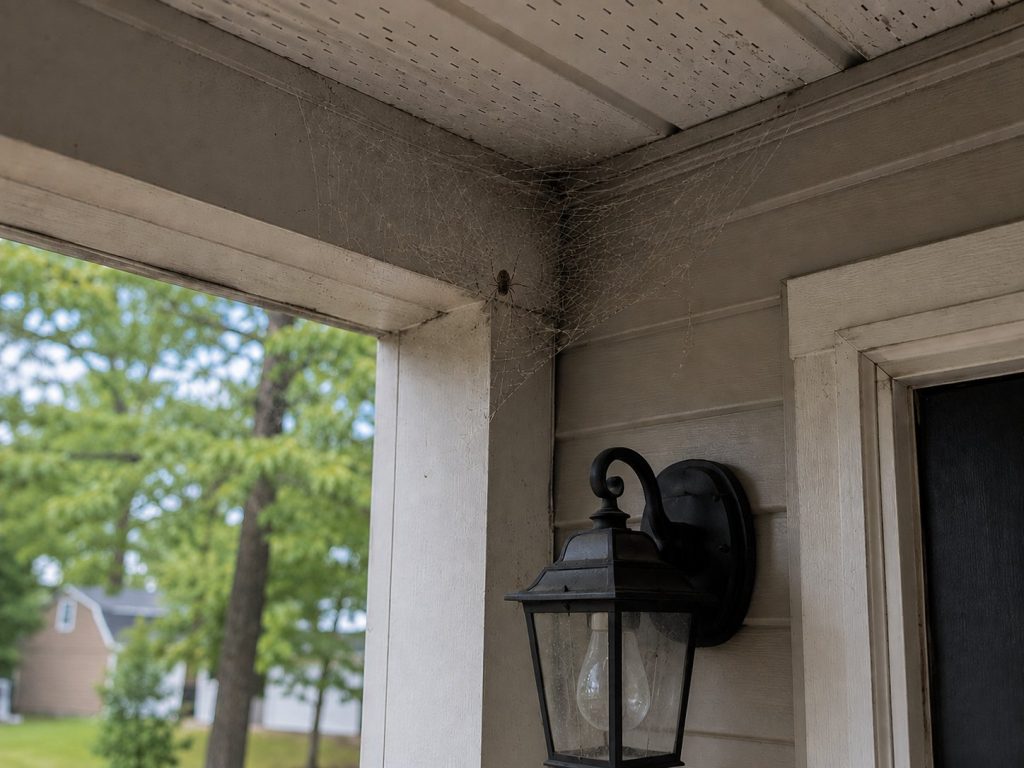
Spider webs are more than just a place to catch prey. They also serve as a spider’s home. Removing webs regularly discourages spiders from remaining in the same location. While many spiders can rebuild their webs quickly, repeated removal makes the area less attractive over time. Pay close attention to areas such as:
- Porch ceilings
- Window frames
- Doorways
- Deck railings
- Garage corners
- Exterior light fixtures
- Eaves and soffits
Using a long-handled brush or telescoping duster makes it easier to reach high corners safely.
Reduce Outdoor Lighting
Exterior lights attract flying insects after sunset. As insects gather around porch lights, garage lights, dock lighting, and patio fixtures, spiders quickly recognize these locations as excellent hunting grounds.
You don’t necessarily have to eliminate outdoor lighting, but reducing unnecessary lighting or switching to warmer-coloured bulbs can help reduce insect activity. Motion-activated lighting is another effective option because lights remain off until needed.
Keep Vegetation Away from the House
Shrubs, bushes, vines, and tree branches that touch your home create natural bridges for spiders and insects. Keeping landscaping properly trimmed reduces easy access to siding, windows, and rooflines.
Maintaining a clear space between plants and your home’s exterior also improves airflow and allows technicians easier access if professional treatment becomes necessary. Removing excessive vegetation around decks, sheds, and cottages can significantly reduce spider activity throughout the season.
Eliminate Insect Food Sources
Since spiders depend entirely on insects for food, reducing insect populations naturally discourages spiders. Keeping garbage containers tightly sealed, cleaning up outdoor food spills, removing standing water, and maintaining clean outdoor eating areas all help reduce insects.
Inside the home, promptly cleaning crumbs, storing food in sealed containers, and keeping kitchen counters clean limits insects that may attract spiders. The fewer insects available, the fewer spiders your home is likely to support.
Seal Entry Points
Although many spiders remain outdoors, some eventually move inside through small openings around the home. Inspect areas such as:
- Window frames
- Door sweeps
- Utility penetrations
- Foundation cracks
- Dryer vents
- Garage doors
- Damaged weatherstripping
Sealing these openings helps reduce the number of spiders entering your home while also improving energy efficiency.
Keep Basements and Crawl Spaces Dry
Many spiders prefer cool, undisturbed areas with moderate humidity. Basements, crawl spaces, utility rooms, and storage areas often provide ideal conditions. Running a dehumidifier in damp basements can make these areas less attractive to both spiders and the insects they feed on. Repairing plumbing leaks and improving ventilation also reduces excess moisture that supports insect activity.
Declutter Storage Areas
Boxes, unused furniture, seasonal decorations, and stored belongings create excellent hiding places for spiders. Keeping storage areas organized reduces available shelter and makes routine inspections easier. Whenever possible, store items in sealed plastic containers rather than cardboard boxes, which also attract certain insects. Regular cleaning behind stored items helps prevent spiders from establishing themselves unnoticed.
Maintain Your Deck and Porch
Decks and porches are among the most common locations for spiders around Port Dover homes. Covered outdoor structures provide protection from rain while offering numerous corners and beams where spiders can anchor webs. Cleaning railings, corners, furniture, and ceilings regularly helps discourage web building. Checking beneath decks for excessive vegetation and debris also helps reduce hiding places.
Keep Firewood Away from the Home
Firewood piles often provide shelter for insects, spiders, and other pests. Whenever possible, stack firewood well away from your home’s foundation and avoid storing wood directly against exterior walls. Before bringing firewood indoors, inspect it for spiders or other insects that may be hiding beneath the bark. This simple habit reduces the likelihood of accidentally introducing pests into your home.
Why Waterfront Homes Experience More Spiders
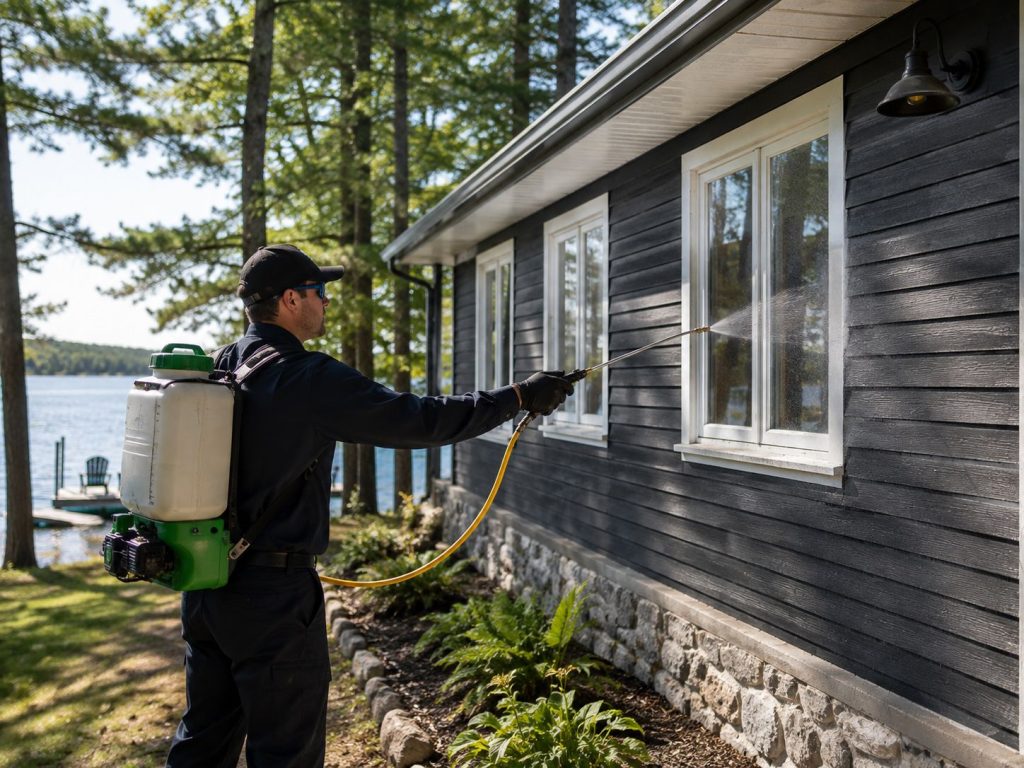
Many Port Dover homeowners live close to Lake Erie or own seasonal waterfront cottages. These properties naturally experience greater spider activity due to increased insect populations. Water attracts mosquitoes, midges, flies, and countless other insects that become food for spiders.
Large orb weavers are especially common around waterfront properties, where they build impressive webs between railings, porch lights, docks, and nearby vegetation. While some increase in spider activity is unavoidable near the water, proper maintenance and professional treatments can greatly reduce the number of spiders around your home.
Should You Kill Every Spider?
Many spiders provide valuable natural pest control by feeding on mosquitoes, flies, and other nuisance insects. Outdoor spiders play an important ecological role and usually prefer avoiding human contact. However, when spiders begin building large numbers of webs around entrances, windows, patios, garages, or inside living spaces, they become more of a nuisance than a benefit.
If you’re constantly cleaning webs or finding spiders indoors, it’s usually a sign that the surrounding environment is supporting too much spider activity. Rather than focusing on individual spiders, addressing the conditions attracting them provides much better long-term results.
Professional Spider Control
Professional spider control targets both spiders and the conditions that allow them to thrive. Rather than simply spraying visible spiders, professional treatments focus on the areas where spiders hide, travel, and build webs. Exterior applications are typically made around foundations, windows, soffits, entry points, decks, porches, garages, sheds, and other common harbourage areas. Interior treatments, when necessary, are applied around baseboards, unfinished basements, utility rooms, crawl spaces, and other locations where spiders commonly hide.
Professional products also help reduce many of the insects that attract spiders, making your property less appealing over time. Combined with regular maintenance and habitat reduction, this comprehensive approach provides longer-lasting control than relying on store-bought sprays alone.
Seasonal Spider Prevention
Spider activity changes throughout the year, making seasonal maintenance important. Spring is an excellent time to remove old webs, inspect your home’s exterior, trim vegetation, and address entry points before insect populations begin increasing.
During summer, routine cleaning around decks, porches, and outdoor lighting helps prevent webs from accumulating. Late summer and early fall often bring the highest level of spider activity, especially around waterfront properties. Continuing regular maintenance during this period can help reduce the number of spiders entering your home as temperatures begin to cool. Consistent preventative care throughout the year provides the best results.
Contact Port Dover Pest for Professional Spider Control
If you’re tired of constantly removing spider webs or finding spiders throughout your home, professional treatment can provide lasting relief. Whether you own a lakeside cottage or a year-round residence, reducing spider activity starts with a thorough treatment plan that targets both spiders and the insects that attract them.
At Port Dover Pest, we provide professional spider control services designed specifically for homes and cottages throughout Port Dover and the surrounding area. Our experienced technicians treat the areas where spiders commonly hide, reduce future activity, and help keep your property looking clean and comfortable throughout the season.
Reach out to Port Dover Pest to schedule a professional spider treatment with our team, and enjoy your home without the constant nuisance of webs and unwanted spiders.