
Spiders are a normal part of the outdoor environment in Port Dover, but that does not mean homeowners want webs covering their windows, porches, decks, siding, and entrances. Spider activity can become especially noticeable around homes and cottages during the warmer months and into early fall, when mature spiders and large webs are easier to spot.
For properties near Lake Erie, the problem can be even more noticeable. Waterfront environments support large populations of mosquitoes, midges, moths, flies, and other insects. Since spiders go where their food is available, homes surrounded by high insect activity can become ideal places for them to build webs.
Seasonal spider treatments are designed to reduce this activity around a property and help prevent spiders from continually taking over exterior living spaces. Rather than waiting until webs are everywhere, professional treatment can be timed around the periods when spiders and their insect prey are most active. Here is what Port Dover homeowners and cottage owners should know about seasonal spider control.
What Is a Seasonal Spider Treatment?
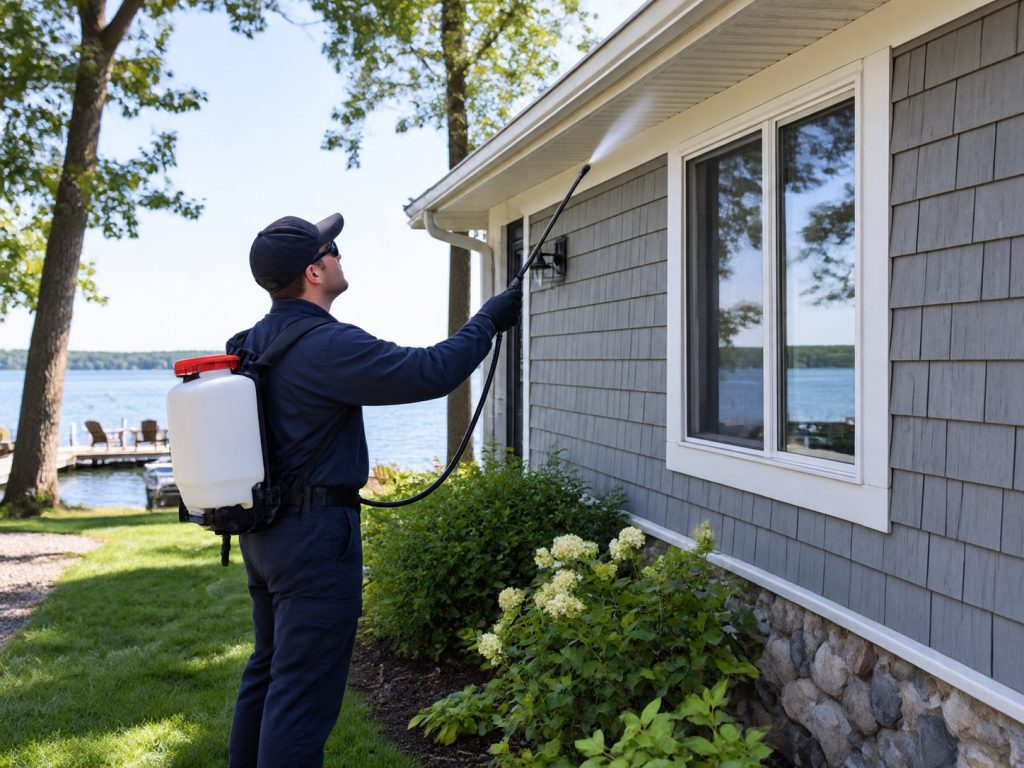
A seasonal spider treatment is a professional pest control service that targets areas where spiders commonly hide, travel, hunt, and build webs around a structure. Unlike treating a single spider found indoors, seasonal control takes a broader approach. The goal is to reduce spider activity across the property, particularly around the exterior areas where problems tend to develop repeatedly. Technicians typically focus on places such as the foundation, windows, doors, siding, porch areas, decks, soffits, eaves, garages, and other sheltered locations.
The treatment creates residual protection on appropriate treated surfaces. Spiders that travel across these areas can be exposed to the product after the technician has left. An effective spider control program also considers the insects spiders depend on for food. Reducing insect activity around a structure can make it much less attractive to spiders.
Why Spider Problems Are Seasonal
Spider activity changes throughout the year because both spiders and their prey respond to temperature and weather conditions. During spring, insects become increasingly active as temperatures rise. This provides spiders with more food and encourages them to establish themselves around homes.
By summer, insect populations are usually much higher. Porch lights, windows, gardens, decks, garbage areas, and waterfront properties can attract significant numbers of flying insects after sunset. Spiders take advantage by building webs nearby. Late summer and early fall are often when homeowners notice spiders the most. Many spiders have reached maturity by this point, making them larger and easier to see. Orb-weaving spiders may also construct large webs between porch posts, deck railings, windows, vegetation, and other exterior structures. Seasonal treatments are intended to interrupt this cycle before spider populations become overwhelming.
Spring Spider Treatments
Spring is an important time for preventative pest control. As temperatures become consistently warmer, insects begin emerging from winter shelter. Ants, flies, beetles, mosquitoes, moths, and many other pests become active around homes. Spider activity follows.
A spring exterior treatment can target areas where spiders and insects are beginning to establish themselves. Treating the foundation, windows, door frames, exterior cracks, and other common pest areas early in the season can reduce the amount of activity that develops later.
Spring is also an excellent time to remove old webs and inspect the exterior of the property. Webs left beneath porch ceilings, around windows, inside garages, and underneath decks can make these locations attractive to returning spiders.
Summer Spider Control
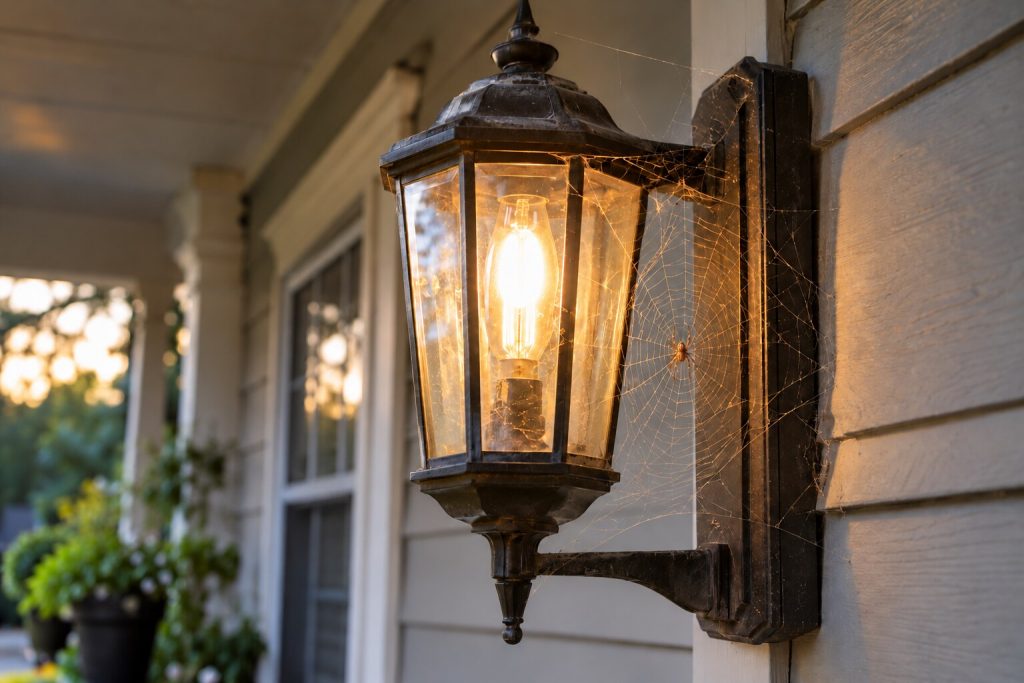
Summer provides ideal conditions for spider activity. Warm weather means abundant insects, and properties near Lake Erie can experience particularly high levels of flying insects. Outdoor lighting becomes one of the biggest contributors to spider problems. Porch lights, garage lights, patio lighting, and cottage deck lights attract insects after dark. Spiders quickly learn that these locations provide reliable feeding opportunities. This explains why homeowners frequently find webs surrounding light fixtures and nearby windows.
A summer spider treatment focuses on these high-activity areas while maintaining residual protection around the structure. Homeowners can improve results by reducing unnecessary outdoor lighting, keeping vegetation trimmed away from the house, and removing webs when they appear.
Why Late Summer Can Be Peak Spider Season
August and September can produce some of the most noticeable spider activity of the year. Many spiders that were small earlier in the summer have now reached adulthood. Large orb weavers become especially visible because of the impressive circular webs they build around homes and cottages.
Mating behaviour also increases movement among certain spider species. Male spiders may travel farther while searching for females, which can result in more sightings around garages, basements, doors, and windows. At the same time, insect populations may still be high enough to provide plentiful food. For these reasons, a property that seemed relatively spider-free in June may look very different by September.
Fall Spider Treatments
Fall spider control is useful for homeowners who are seeing webs accumulate around the exterior or spiders beginning to appear indoors. As nighttime temperatures decline, both spiders and insects start seeking protected environments. Gaps around doors, foundation cracks, window frames, utility penetrations, garages, and other openings may provide access to the structure.
Exterior treatment during this period can help reduce spider activity around common entry points. Fall is also a good time to inspect weatherstripping, caulking, screens, foundation openings, and exterior maintenance issues. Pest treatment works best when it is combined with practical exclusion measures.
Why Port Dover Homes Can Have Heavy Spider Activity
Port Dover has environmental conditions that can support substantial insect and spider populations. Lake Erie is a major factor. Waterfront areas naturally support aquatic and flying insects, many of which become food for spiders. Homes near gardens, mature vegetation, trees, wooded areas, and the shoreline may experience even greater pest pressure.
Cottages can have another challenge. If a property sits empty between visits, spiders have uninterrupted time to build webs around porches, windows, decks, docks, and entrances. A homeowner may leave a cottage looking clean on Sunday and return the following weekend to find several new webs. Seasonal spider treatments can be particularly useful for these properties because they provide ongoing control between visits.
Where Professional Spider Treatments Are Applied
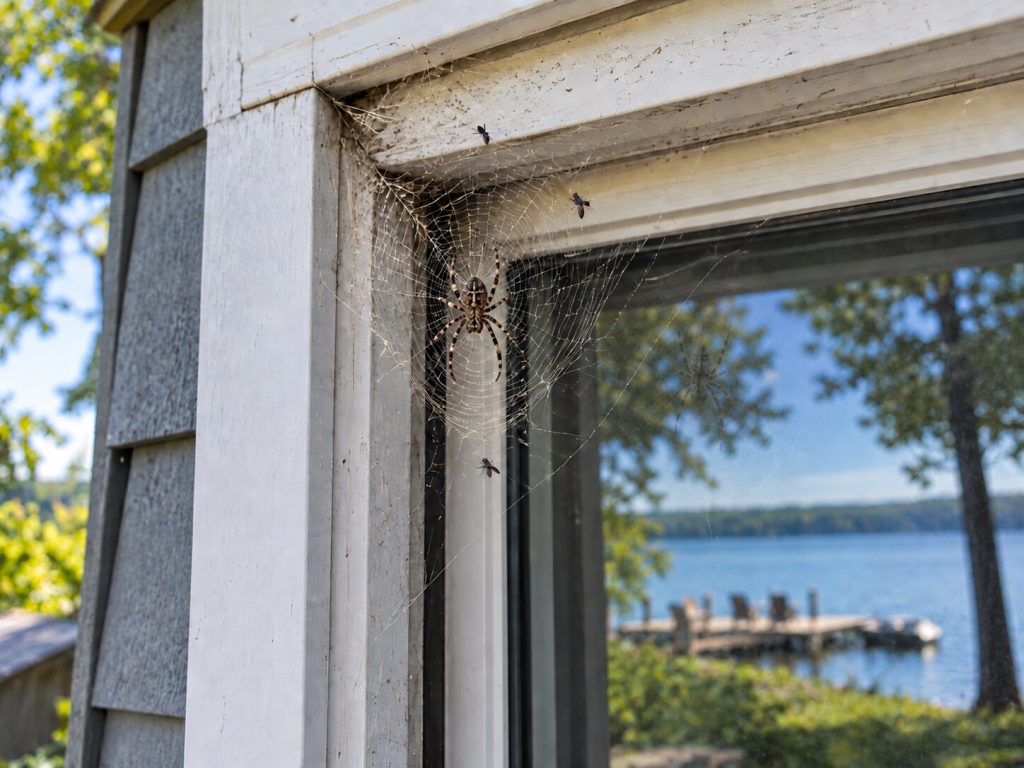
The exact treatment depends on the construction and condition of the property, but professional exterior spider control focuses on areas where activity is most likely. Foundations are important because spiders and many other insects travel along the perimeter of buildings. Windows and doors are also key areas because they provide shelter and potential access indoors. Porches and decks frequently receive attention because their ceilings, railings, posts, and sheltered corners provide excellent locations for web building.
Technicians may also treat appropriate areas around eaves, soffits, exterior fixtures, garages, and other locations where spiders have been active. The goal is not simply to find one visible spider and spray it. Professional control addresses the areas spiders repeatedly use throughout the property.
Why Controlling Other Insects Matters
One of the most important parts of spider management has nothing to do with spiders themselves. Spiders need prey. If hundreds of insects gather around your cottage every evening, spiders have a strong reason to stay. This is why properties with significant mosquito, midge, moth, fly, or other insect activity often develop substantial spider populations.
Professional exterior pest treatments can affect many crawling and flying insects that contact treated surfaces. As insect pressure decreases, the environment becomes less favourable for spiders. This relationship explains why simply knocking down webs rarely provides lasting control. If the food source remains, another spider may eventually occupy the same location.
Should Spider Webs Be Removed?
Web removal is a useful part of spider management. Removing webs improves the appearance of the property and eliminates existing spider habitat. It is particularly helpful around entrances, porches, windows, exterior lights, decks, and other highly visible areas.
However, web removal should be considered maintenance rather than a complete spider treatment. A homeowner can remove a web in the morning and find another in the same corner a few days later if insects continue gathering there. Combining regular web removal with professional treatment and insect reduction generally provides much better results.
Exterior vs Interior Spider Treatments
Most seasonal spider problems originate outside, which makes exterior treatment especially important. Outdoor treatment targets spiders before they settle around windows, entrances, garages, porches, and other areas close to the structure. Some properties also require interior treatment.
Spiders may establish themselves in basements, crawl spaces, utility rooms, garages, storage rooms, and other quiet locations. If significant indoor activity is present, an interior treatment may be recommended in addition to exterior service. Reducing clutter and moisture indoors can also make these areas less attractive to spiders and their prey.
How Homeowners Can Improve Treatment Results
Professional treatment works best when the surrounding property is maintained in ways that discourage spider activity. Vegetation should be trimmed so bushes and branches are not constantly touching the siding or roof. Garbage containers should remain closed, and outdoor food spills should be cleaned promptly. Standing water should be addressed where practical because it can contribute to mosquito and insect populations.
Homeowners should also consider how exterior lighting is used. Lights that remain on throughout the night can attract large numbers of insects to exactly the areas where homeowners least want spiders. Turning unnecessary lights off or using motion-activated fixtures can reduce this attraction. Sealing gaps around doors, windows, utility penetrations, and foundations can further reduce the chance of spiders moving indoors.
How Long Does a Spider Treatment Last?
The effectiveness of any exterior treatment depends on several factors, including weather, property conditions, pest pressure, treated surfaces, and the products being used. Rain, sunlight, renovations, pressure washing, and other environmental factors can gradually affect exterior residues.
Spider pressure can also vary significantly between properties. A waterfront cottage with exterior lighting and dense vegetation may experience greater activity than a home farther from the shoreline. This is why seasonal pest management is often more effective than expecting one application to permanently eliminate every spider from a property. The objective is sustained reduction and control throughout periods of high activity.
Can You Completely Eliminate Spiders Outdoors?
No realistic pest control program can permanently eliminate every spider from an outdoor property. Spiders are part of the natural environment, and new spiders can migrate from surrounding vegetation, neighbouring properties, gardens, shoreline areas, and other habitats.
Professional spider control instead aims to significantly reduce activity where it matters most: around the home. Keeping spiders away from doors, windows, patios, decks, porches, garages, and other commonly used spaces can make the property considerably more comfortable. Regular maintenance and seasonal treatments help maintain those results.
When Is the Best Time to Treat for Spiders?
There is no single perfect date because weather conditions vary each year. Generally, spider management becomes increasingly important from spring through early fall. Preventative treatments earlier in the season can help limit populations before they become established, while summer and early fall treatments address periods of heavier activity.
If you’re already seeing numerous webs around windows, porch lights, siding, soffits, or deck railings, there is usually little benefit in waiting for the problem to become worse. Visible web accumulation is a strong indication that your property is providing both suitable habitat and a reliable insect food source.
Seasonal Spider Control for Port Dover Cottages
Cottage properties deserve special consideration because they may not be occupied every day. Spiders can build extensive webs while owners are away, particularly around waterfront decks, screened porches, boathouses, windows, outdoor furniture, and exterior lighting. Regular exterior treatment can reduce the amount of activity that develops between visits.
Cottage owners should also check storage areas, sheds, garages, docks, and exterior furniture periodically. Keeping these locations clean and reducing clutter can eliminate many potential hiding places. For cottages surrounded by trees or shoreline vegetation, maintaining a clear area around the building can also make a noticeable difference.
Book Seasonal Spider Treatment with Port Dover Pest
Spider activity is a natural part of living near Lake Erie, but excessive webs and spiders around your home or cottage do not have to become an ongoing seasonal problem.
A professional treatment program can target the areas where spiders hide, travel, and build webs while also reducing many of the insects that attract them in the first place. Combined with web removal, property maintenance, and preventative measures, seasonal treatment provides a practical approach to keeping spider activity under control.
Port Dover Pest provides professional spider treatments for homes and cottages throughout Port Dover and the surrounding area. Whether spiders are covering your porch, appearing around exterior windows, building webs beside lights, or moving indoors as temperatures cool, our team can provide a treatment suited to your property. Book your seasonal spider treatment with Port Dover Pest and reduce unwanted spiders and webs around your home or cottage.