
As summer begins to wind down in Port Dover, many homeowners notice something frustrating: spiders suddenly seem to be everywhere. Webs appear around porch lights, garages, windows, decks, and cottage entrances. Larger spiders may begin showing up indoors, while outdoor webs seem to reappear almost as quickly as they are removed.
It can feel as though spiders suddenly invade homes during the fall, but there are several reasons why spider activity becomes much more noticeable at this time of year. Seasonal changes, insect populations, mating behaviour, cooler temperatures, and the environment around Lake Erie all contribute to increased spider sightings.
Understanding why spiders are worse in the fall can help Port Dover homeowners take practical steps to reduce activity around their homes and cottages before the season progresses.
Why Spider Activity Increases in the Fall
Spiders are active throughout spring and summer, but many species are much easier to notice during late summer and fall. One reason is simple: they have had an entire season to grow. Many spiders hatch or become active earlier in the year and spend the warmer months feeding on insects. By August and September, they have reached a much larger adult size. A spider that was almost impossible to notice in June may be very obvious by September.
This is especially true for orb weavers, which are known for constructing large circular webs around homes, gardens, porches, and vegetation. Larger spiders combined with larger webs naturally make fall activity seem much more intense.
Fall Is Mating Season for Many Spiders
Another major reason homeowners see more spiders in the fall is mating behaviour. During much of the year, spiders remain close to sheltered hunting areas where food is abundant. Once mating season begins, males start travelling farther in search of females. This increased movement makes them much more likely to cross floors, enter garages, wander through basements, or appear around doorways.
Homeowners may suddenly find spiders in areas where they were rarely seen during summer. The number of spiders around the property may not have dramatically increased. Instead, existing spiders are simply moving more frequently and becoming easier to spot.
Cooler Temperatures Push Spiders Toward Structures
As nighttime temperatures begin dropping around Port Dover, spiders and the insects they feed on start seeking more sheltered environments. Homes, cottages, garages, sheds, crawl spaces, and basements provide protection from cold temperatures and strong autumn weather. Small cracks around foundations, windows, siding, utility lines, and door frames provide easy access indoors.
Once spiders enter, they typically settle into quiet locations where they can remain undisturbed. Basements, storage rooms, utility areas, garages, and crawl spaces are especially attractive because they offer darkness, shelter, and access to insects.
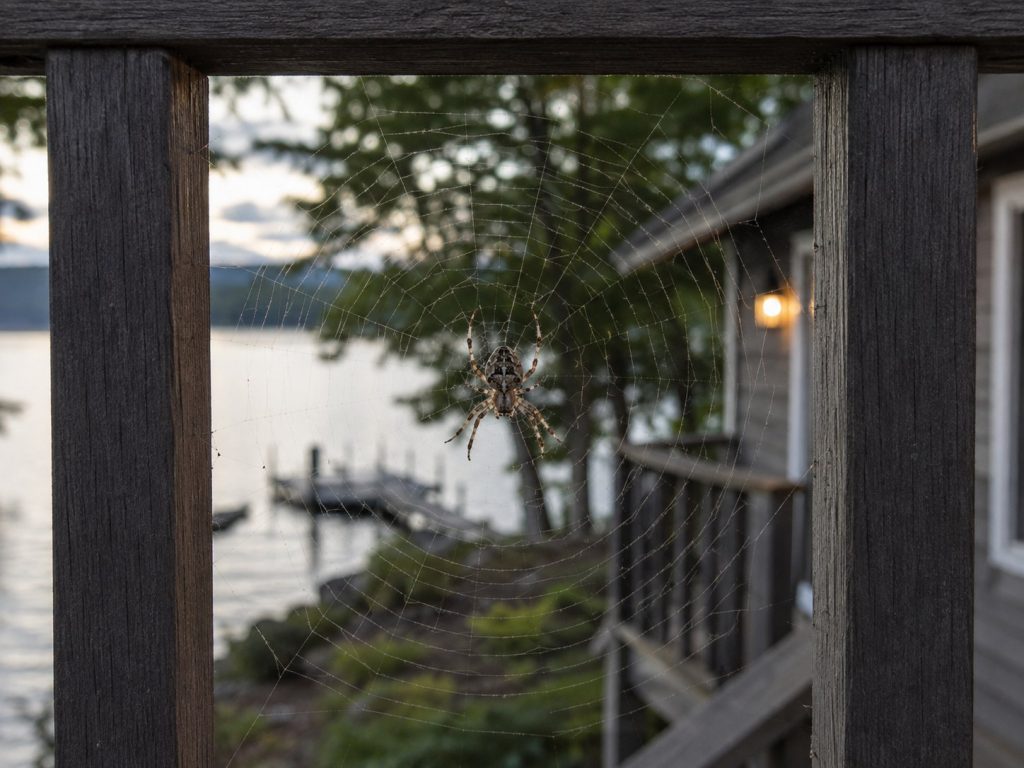
Lake Erie Contributes to High Spider Activity
Port Dover’s location along Lake Erie creates excellent conditions for spiders throughout much of the year. Waterfront environments support large populations of mosquitoes, midges, flies, moths, beetles, and other flying insects. These insects provide an abundant food source for spiders.
During late summer and early fall, insect activity can remain strong even as evenings become cooler. Spiders take advantage of this final period of abundant food before winter. Homes and cottages near the shoreline often experience particularly heavy spider activity around decks, docks, boathouses, porches, and outdoor lights.
Porch Lights Create Ideal Feeding Areas
Exterior lighting is one of the biggest spider attractants around homes. Technically, spiders are not attracted to the light itself. They are attracted to the insects gathering around it. Moths, mosquitoes, midges, and other insects are drawn toward illuminated areas after sunset. Spiders quickly recognize these locations as reliable hunting grounds. This is why webs frequently appear beside:
- Porch lights
- Garage lights
- Exterior door lights
- Cottage deck lights
- Dock lighting
- Patio fixtures
During the fall, mature spiders can build surprisingly large webs around these locations. Removing webs may improve appearance temporarily, but new spiders often move into the same area if insects continue gathering there.
Why Orb Weaver Spiders Are So Noticeable in Fall
Orb weavers are among the most recognizable fall spiders in Port Dover. These spiders build the large, circular webs commonly seen between porch posts, tree branches, deck railings, and outdoor structures. By late summer and early fall, adult orb weavers can become quite large compared with their size earlier in the season. Their webs can also span several feet, making them especially noticeable around homes and cottages.
Although their appearance may be intimidating, orb weavers generally prefer remaining outdoors where they can capture flying insects. Problems usually arise when their webs repeatedly appear across walkways, doorways, patios, and other areas frequently used by people.
Why Spiders Gather Around Windows
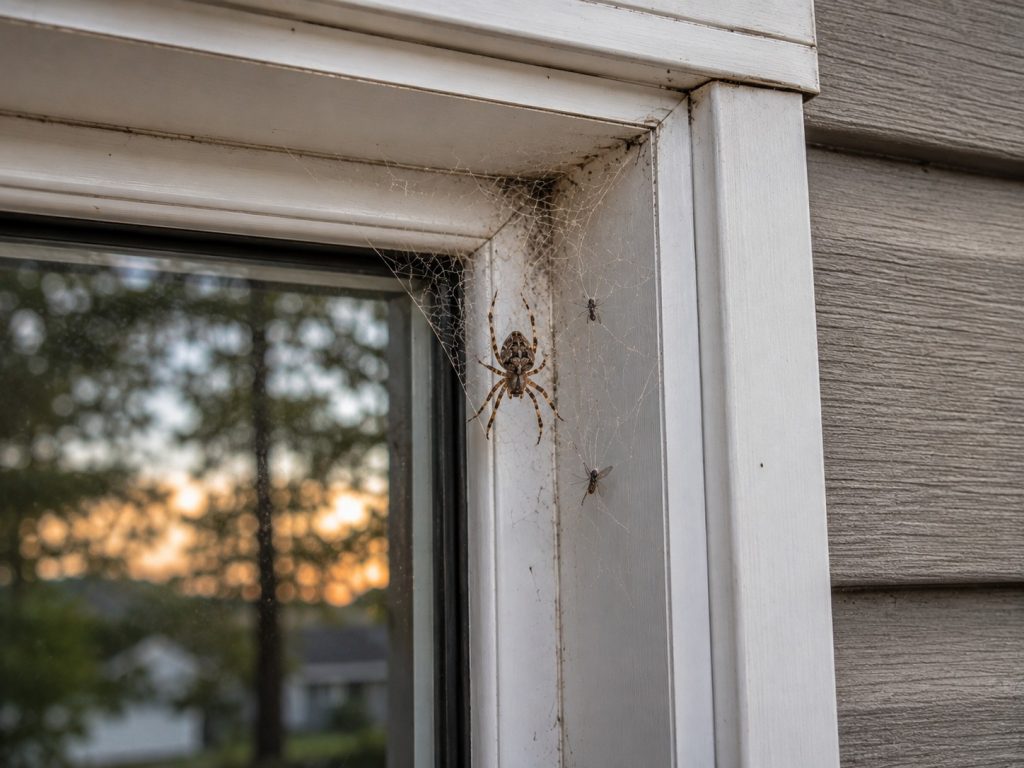
Windows are another common location for fall spider activity. Indoor lighting shines through windows at night and attracts insects to the exterior glass. Spiders take advantage of this concentration of prey by building webs around window frames and nearby siding. Small gaps around older windows may also allow spiders to move indoors.
Cottages and older Port Dover homes can be particularly vulnerable if weatherstripping, caulking, or trim has deteriorated. Regularly inspecting and sealing these areas can reduce both spider and insect entry.
Why Basements See More Spiders in Fall
Basements provide many of the conditions spiders prefer. They are usually quiet, dark, protected, and slightly more humid than the rest of the home. They may also contain insects such as flies, beetles, centipedes, and other small pests. When temperatures cool outdoors, spiders may enter through foundation cracks or basement windows and remain inside. Cellar spiders are particularly common in basements, utility rooms, and crawl spaces. Homeowners may also notice larger hunting spiders crossing basement floors during the fall. Reducing clutter, sealing cracks, controlling moisture, and reducing insect activity can make these areas less appealing.
Cottage Owners Often Notice Heavy Fall Activity
Seasonal cottages can experience significant spider problems in the fall. Properties that remain vacant during portions of the week give spiders plenty of time to construct webs without disturbance. Cottages also tend to be surrounded by mature trees, gardens, shoreline vegetation, docks, and outdoor structures that support large insect populations. By the time owners arrive for a weekend visit, webs may have accumulated around entrances, patios, windows, and porch ceilings. Routine exterior spider treatment can be especially useful for seasonal properties where constant web removal is inconvenient.
Do Spiders Actually Move Indoors for Winter?
Some spiders do enter homes in response to changing weather, but the idea that every spider suddenly moves indoors for winter is somewhat misleading. Many spiders seen indoors during fall may already have been living in the structure for some time. Others wander inside while searching for mates or following insects.
The change in season simply makes their activity more noticeable. Regardless of when they entered, repeated indoor spider sightings indicate that the home is providing suitable shelter or food.
Why Removing Webs Alone Isn’t Enough
Removing spider webs is an important maintenance step, but it does not solve the underlying problem. If insects remain abundant around your home, spiders will continue returning. A porch corner beside a bright light may have its web removed several times, only for another spider to occupy the location shortly afterward.
Effective spider control requires reducing both the spiders and the insects attracting them. This is why professional treatment typically focuses on the home’s exterior rather than simply killing individual spiders.
How to Reduce Fall Spider Activity
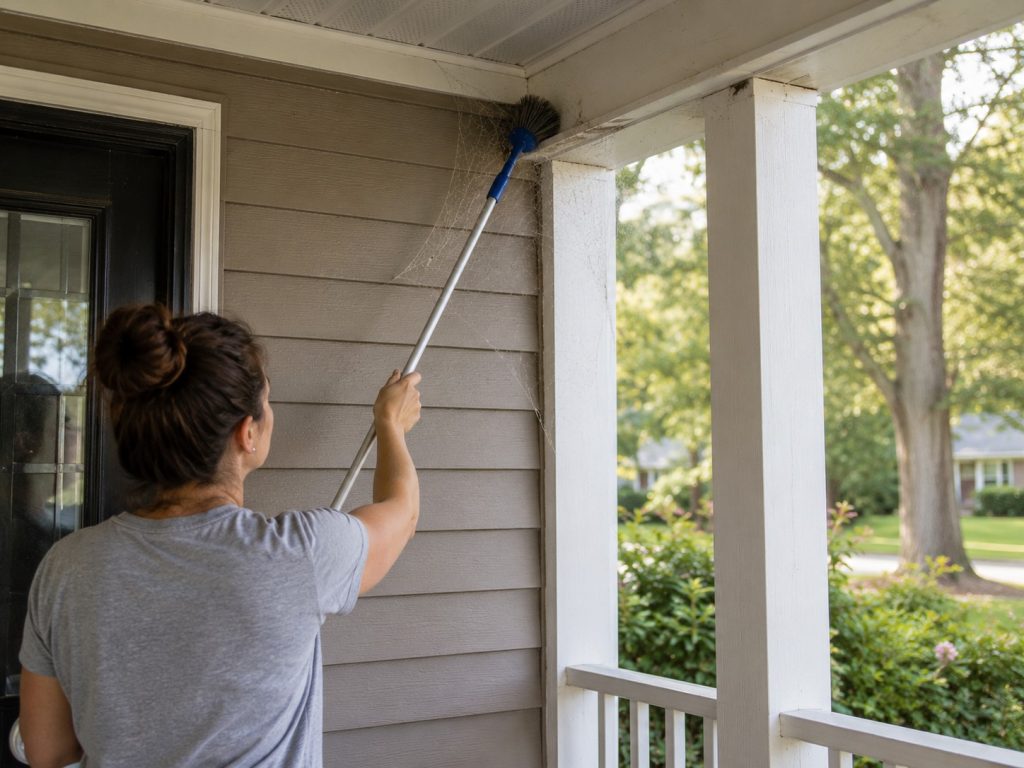
Homeowners can make several changes to reduce spider populations around their properties. Keeping vegetation trimmed away from siding reduces access from nearby plants. Sealing foundation cracks, gaps around windows, and damaged weatherstripping can help stop spiders from entering. Outdoor lighting can also be adjusted. Turning off unnecessary lights or using lighting only when needed may reduce the number of insects gathering around doors and windows.
Regularly removing webs from porch ceilings, railings, windows, soffits, and exterior corners discourages spiders from remaining in heavily used areas. Reducing clutter inside garages, basements, and storage rooms removes additional hiding places. These steps can help, but properties experiencing heavy seasonal spider activity may require professional treatment.
How Professional Spider Control Works
Professional spider control takes a broader approach than simply spraying the spiders you can see. A pest control technician treats key areas where spiders commonly travel, hide, and build webs. Exterior treatment may include foundations, siding, window frames, door frames, soffits, eaves, porch structures, garages, and other common harbourage areas.
The treatment also affects many of the insects that spiders rely on for food. Reducing the insect population around the structure makes the property much less attractive to spiders over time. Professional treatments can be especially valuable during late summer and early fall when spider activity is at its highest. For waterfront homes and cottages, where insect pressure can remain significant throughout the season, exterior treatment provides another layer of protection.
When Should You Schedule Spider Treatment?
Late summer and early fall are excellent times to schedule professional spider control in Port Dover. By this point in the season, many spiders have matured and are actively building webs around structures. Treatment during this period helps reduce existing populations while limiting the number of spiders settling around the property as cooler weather arrives.
If webs are already appearing around windows, lights, doorways, decks, or garages, waiting longer usually gives spiders more time to establish themselves. Early treatment makes seasonal spider activity easier to manage.
Contact Port Dover Pest for Fall Spider Control
Fall spider activity is a normal part of the changing season, especially around Lake Erie, but that doesn’t mean you have to spend every week removing webs from your home or cottage. If spiders are taking over your porch, windows, siding, garage, or outdoor living spaces, Port Dover Pest can help.
Our professional spider control treatments target the areas where spiders hide and build webs while also reducing many of the insects attracting them to your property. Whether you live in a year-round home or own a seasonal cottage near the water, we can provide an effective treatment designed for local conditions. Reach out to Port Dover Pest to book your spider treatment and reduce unwanted spider activity around your property this fall.