
Carpenter ants are one of the most destructive pests homeowners can encounter in Port Dover. Unlike pavement ants that typically invade kitchens searching for food, carpenter ants can cause structural damage by excavating wood to build their nests. While they do not eat wood like termites, their tunneling activity can weaken building materials over time and create costly repair issues if left untreated.
Many homeowners do not realize they have a carpenter ant problem until the infestation has become well established. Carpenter ants often remain hidden inside walls, attics, ceilings, decks, and other structural areas for months or even years. By learning the warning signs of carpenter ant damage, homeowners can identify problems earlier and take action before significant damage occurs.
What Makes Carpenter Ants Different?
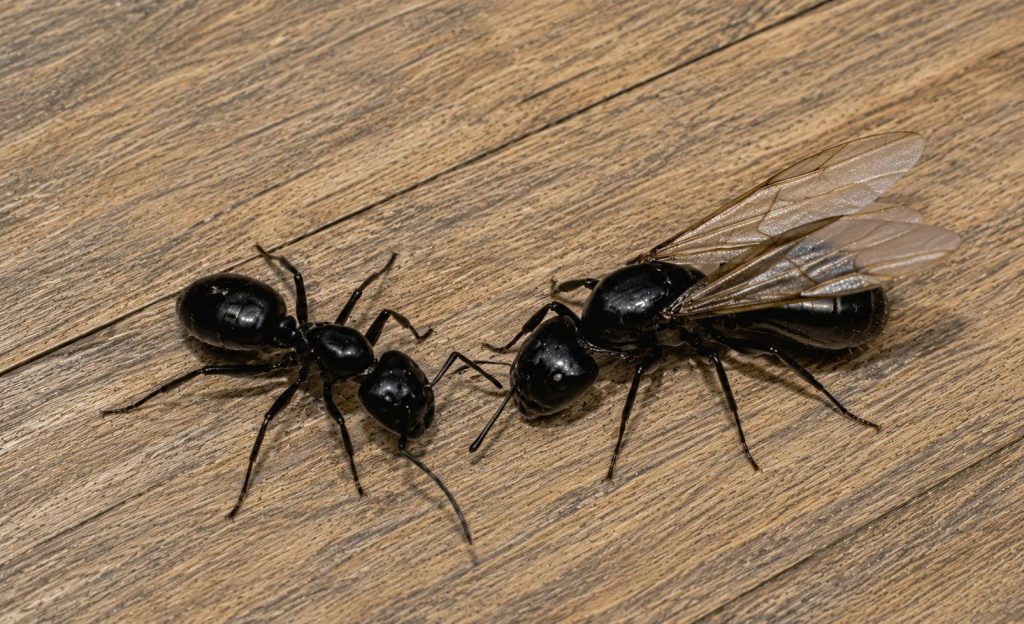
Carpenter ants are among the largest ants found in Ontario. Worker ants can range from approximately 6 to 13 millimetres in length and are usually black, dark brown, or a combination of black and reddish colouring.
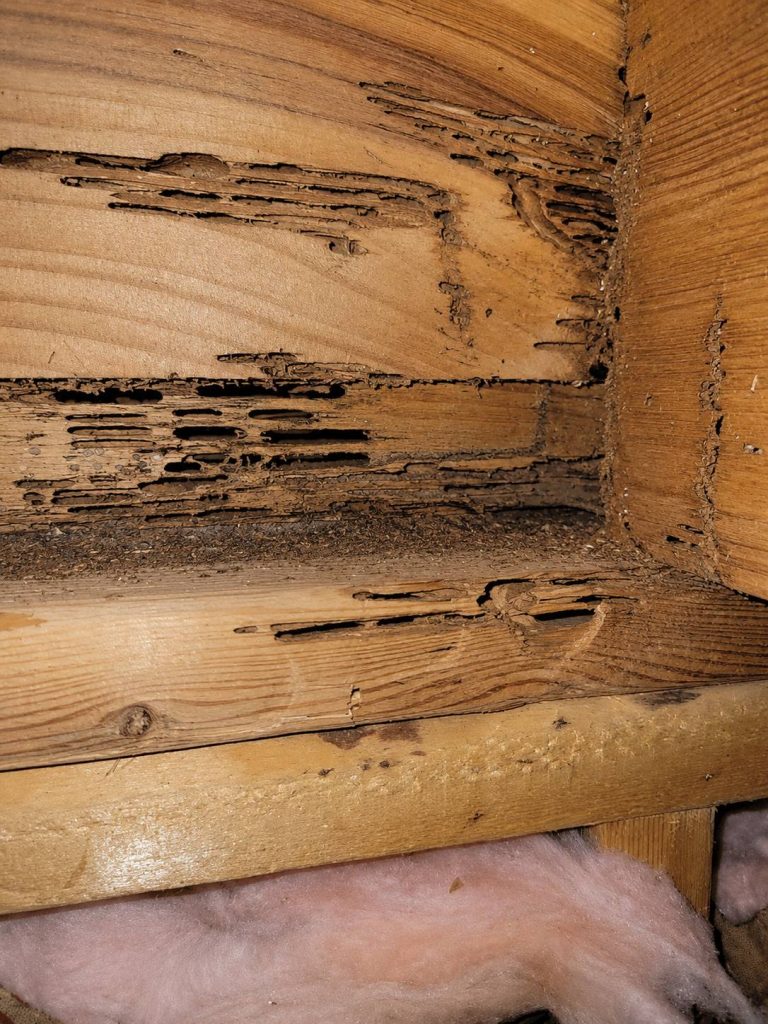
Unlike termites, carpenter ants do not consume wood for nutrition. Instead, they remove wood fibres to create smooth tunnels and nesting chambers. These galleries allow the colony to expand while providing shelter for workers, larvae, and reproductive ants. Because carpenter ants prefer damp or weakened wood, infestations often begin in areas where moisture problems already exist.
Small Piles of Sawdust-Like Material
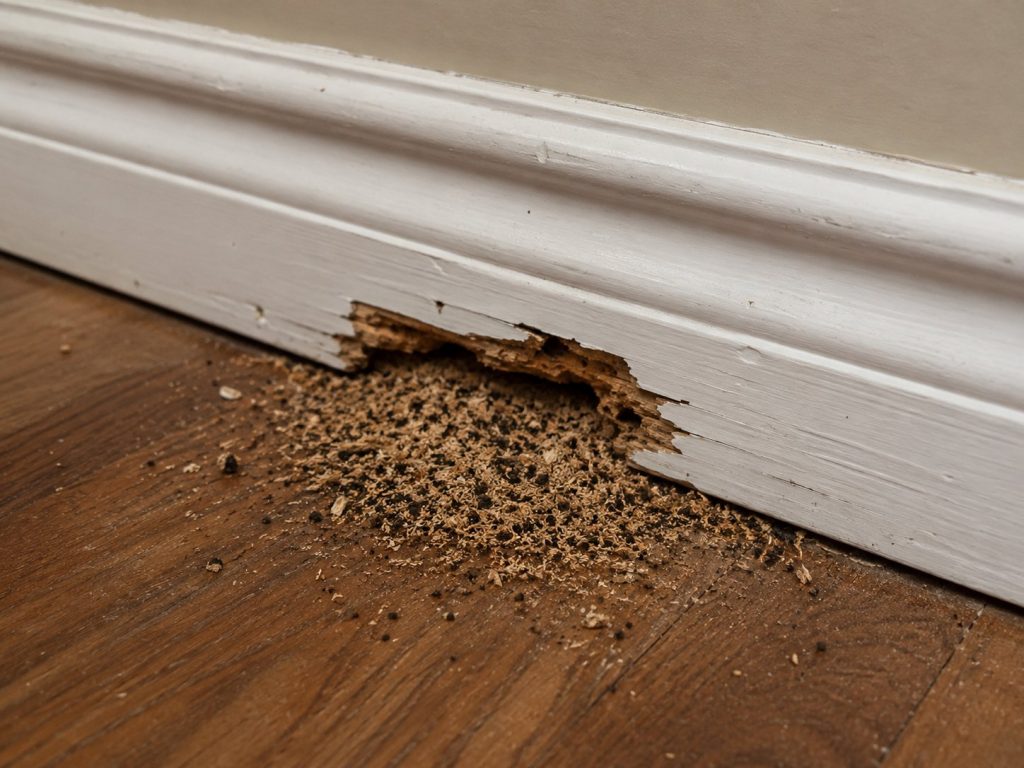
One of the most common signs of carpenter ant activity is the appearance of small piles of wood debris beneath walls, window frames, baseboards, decks, or other wooden structures. This material is commonly referred to as frass. Unlike actual sawdust created during construction, carpenter ant frass often contains shredded wood particles mixed with insect body parts, insulation fragments, and other debris removed from the nest.
As carpenter ants excavate galleries, they push this material out through small openings known as kick-out holes. Homeowners sometimes mistake frass for ordinary dust or debris, but recurring piles in the same location should always be investigated.
Rustling Sounds Inside Walls
Because carpenter ants often nest within structural voids, homeowners occasionally hear activity before they see the insects themselves. Large colonies may produce faint rustling, crackling, or scratching sounds inside walls, ceilings, or wooden structures. These noises are typically more noticeable during quiet periods, especially at night when the colony is most active. While sounds in walls can also indicate rodents or other wildlife, carpenter ant activity should be considered whenever these noises are accompanied by other signs of infestation.
Hollow-Sounding Wood
As carpenter ants continue excavating galleries, the wood they occupy gradually loses its internal strength. In advanced infestations, affected wood may begin sounding hollow when tapped. Window frames, door frames, wall studs, deck supports, porch posts, and fascia boards are common areas where this occurs.
The exterior surface of the wood may appear normal while significant damage exists underneath. This hidden nature is one reason carpenter ant infestations often remain undetected for long periods.
Visible Carpenter Ants Indoors
Finding large black ants inside the home is often the first warning sign homeowners notice. A few carpenter ants may not necessarily indicate a nest inside the structure, as workers frequently travel considerable distances while searching for food. However, repeated sightings of large ants indoors, particularly during winter, often suggest that a colony may be established within the home. Ants appearing around windows, kitchens, bathrooms, basements, or attic spaces should never be ignored. The more frequently carpenter ants are observed indoors, the greater the likelihood that a nearby colony exists.
Winged Ants Inside the Home
Mature carpenter ant colonies produce winged reproductive ants known as swarmers. These winged ants emerge when the colony is ready to establish new nests. Homeowners often discover them near windows, doors, light fixtures, or attic spaces. Seeing swarmers indoors is a strong indication that a carpenter ant colony may be nesting somewhere within the structure.
Many people confuse winged carpenter ants with termites. While both have wings, carpenter ants have narrow waists, bent antennae, and differently sized wing pairs. A professional inspection can accurately identify which pest is present.
Moisture-Damaged Wood
Carpenter ants are strongly attracted to wood that has been softened by moisture. Areas affected by roof leaks, plumbing leaks, condensation, poor drainage, or inadequate ventilation often become ideal nesting locations. Common problem areas include:
- Window frames
- Door frames
- Roof overhangs
- Decks and porches
- Attics
- Crawl spaces
- Basement framing
If moisture damage is present and carpenter ants are nearby, the risk of infestation increases significantly.
Damaged Decks and Outdoor Structures
Carpenter ant infestations are not limited to the interior of homes. Decks, fences, sheds, gazebos, and cottage structures can also become nesting sites. Port Dover’s proximity to Lake Erie creates higher humidity levels that can accelerate wood deterioration and create ideal conditions for carpenter ants. Wooden structures exposed to moisture and limited sunlight are particularly vulnerable. Inspecting outdoor structures regularly can help identify problems before ants spread into the home itself.
Multiple Colonies and Satellite Nests
One challenge with carpenter ants is that they often establish multiple nesting sites. A primary colony may be located in a tree stump, dead tree, or outdoor structure, while satellite nests develop inside the home. These interconnected colonies allow carpenter ants to expand rapidly and occupy large areas of a property. As a result, treating only one visible nesting location often fails to eliminate the entire infestation. Professional inspections are important because they help identify all active nesting areas.
Why Carpenter Ant Damage Can Become Serious
Carpenter ant damage develops gradually, but the longer an infestation remains active, the more extensive the destruction can become. Over time, galleries expand and additional workers continue excavating wood. Structural components may weaken, requiring repairs or replacement.
While carpenter ants rarely cause a structure to become unsafe in the short term, years of unchecked activity can result in significant repair costs. Early detection remains the most effective way to minimize damage.
Why DIY Treatments Often Fail
Many homeowners attempt to eliminate carpenter ants using store-bought sprays. While sprays may kill visible worker ants, they often fail to reach the colony itself. Carpenter ants frequently nest deep within walls, ceilings, crawl spaces, or exterior structures where over-the-counter products cannot effectively penetrate.
In some cases, improper treatment can cause colonies to relocate and establish additional nesting sites throughout the property. Successful carpenter ant control requires locating active nests, identifying contributing moisture issues, and applying targeted treatments designed to eliminate the colony.
Professional Carpenter Ant Treatment
Professional carpenter ant treatment focuses on eliminating the infestation throughout the entire home rather than simply targeting the areas where ants are currently visible. Because carpenter ants often establish multiple nesting locations, treating only an active nest may not fully solve the problem. Colonies can spread through wall voids, attic spaces, basements, crawl spaces, and other hidden areas of the structure. In many cases, satellite nests exist in locations that homeowners never see.
A comprehensive carpenter ant treatment involves applying products throughout key areas of the home where carpenter ants travel, forage, and establish colonies. This whole-house approach helps ensure that hidden activity is addressed and reduces the likelihood of surviving ants creating new nesting sites elsewhere in the structure.
Exterior treatment is also an important part of the process. Carpenter ants frequently originate from nearby trees, stumps, landscaping timbers, decks, or other outdoor structures before moving into the home. Treating the exterior foundation and surrounding property helps reduce ant pressure and prevents new ants from entering. By focusing on the entire structure rather than a single nest location, professional carpenter ant treatments provide more reliable and long-lasting results. This approach not only eliminates existing activity but also helps protect the home from future infestations.
Preventing Carpenter Ant Damage
Preventing carpenter ant infestations begins with reducing moisture problems. Repairing roof leaks, fixing plumbing issues, improving drainage, and maintaining proper ventilation can make the property less attractive to carpenter ants.
Regular inspections of decks, porches, window frames, and other wooden structures can also help identify potential problems early. Removing dead trees, rotting stumps, and deteriorating wood around the property reduces opportunities for colonies to establish themselves nearby. Combined with professional pest management, these preventative measures can significantly reduce the risk of infestation.
Contact Port Dover Pest for Carpenter Ant Control
If you have noticed carpenter ants, frass, hollow-sounding wood, or signs of structural damage, it is important to act quickly before the infestation becomes more severe.
Port Dover Pest provides professional carpenter ant inspections and treatment services throughout Port Dover and surrounding areas. Our experienced team can identify active colonies, locate hidden nesting sites, and develop an effective treatment plan to protect your home or cottage.
Contact Port Dover Pest today to schedule a carpenter ant inspection and stop structural damage before it gets worse.